
Old Games Were Better
It's not just nostalgia

Like many people, I believe that video games aren’t as good as they used to be. To be clear, I’m chiefly talking about double and triple A games. Indie games are wonderful, and a lot of my favorites from the last ten years are indie games. However, they cannot carry the industry on their own.
After all, what do mainstream gamers talk about? Certainly not indie gems like Neon White or Katana Zero. Instead, they are all about the current mega hits. Games like The Last of Us, GTA, God of War, Elden Ring, etc. These games drive the perception of the medium, and to me, they paint a grim picture.
However, complaints about the falling game quality are frequently met with two counterarguments: that people are just getting old and are blinded by nostalgia when they claim that games used to be better.
I hate these counterarguments, as they stifle what could be a productive discussion about the state of the medium. I’m also convinced that they are simply incorrect. So, let’s address them first before discussing what old games did better in more detail.
Incorrect Counterarguments
Let’s start with the argument that people enjoy gaming less when they get older. While it’s clearly true for most people that gaming will be a smaller part of their life during adulthood than during childhood, that doesn’t mean that it gets less enjoyable in itself.
Sure, we tend to have less energy after a long workday and might not feel like playing something super intense like Ghostrunner, as we’re just too tired. In fact, it can be difficult to just start any game at all. However, the same is true for other more demanding hobbies, like hitting the gym or practicing an instrument.
It’s also true that the older we get, the more experience we have with games. As a result, we’re familiar with a lot of concepts and, hence, more rarely encounter something completely new.
Naturally, first times tend to leave a bigger impression than repeated experiences. I guess that’s the reason why game journalists love unconventional games so much, even if said games aren’t that great. Personally, I was blown away when I played my first Persona game back in 2022 because it was such a new concept for me.
However, we mustn’t confuse novelty with quality. An excellent game is greatly enjoyable even if the core concept is very familiar. Let’s take Drova as an example. It’s a 2D indie version of Gothic, a game from 2001. Drova is a very derivative game, yet it was my game of the year 2024, simply because it builds on a great formula and executes it well.


So, the argument that people enjoy gaming less as they get older doesn’t hold any water. Games don’t lose their magic over the years. We just have fewer first-time experiences. Well-made games still have the same spark in them that they always had.
But what about the nostalgia argument? Do we only like old games because they make us feel young again? I don’t think so. If it were just nostalgia that made old games so enjoyable, then playing an old game for which we have no nostalgia would automatically be a bad experience.
However, this just isn’t true. I have experienced this myself: I didn’t play Blood or Quake back in the day. When Blood: Fresh Supply and Quake: Enhanced Edition came out, I gave them a try and enjoyed them immensely.
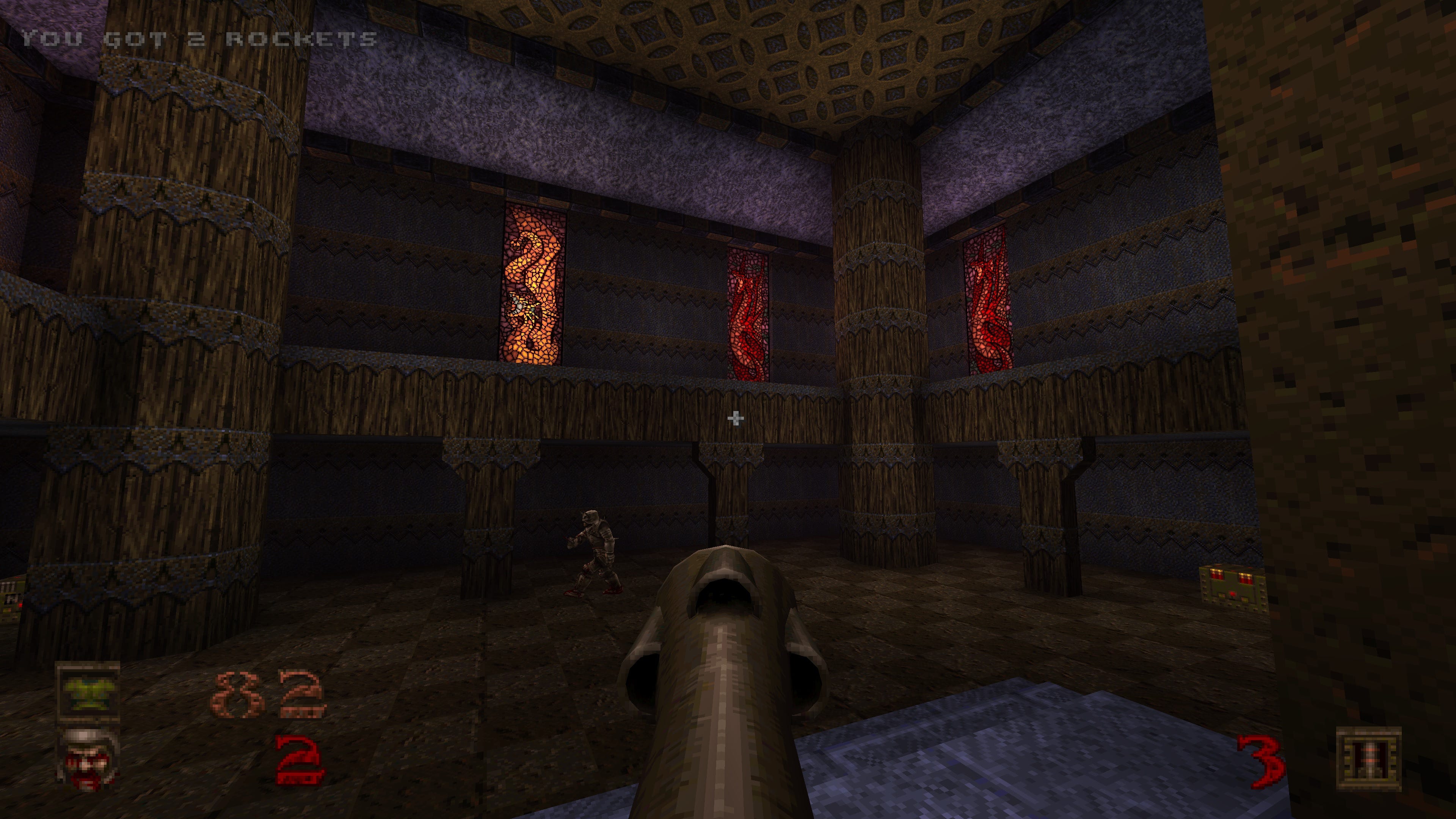
Granted, these are slightly prettied-up versions of old games, but the fundamentals didn’t change. I also first played Master of Orion 2 more than a decade after its release and had a lot of fun with it as well. So, old doesn’t mean outdated.
If you want to test my thesis, I can recommend you a couple of excellent games from the 90s and 00s that you might have missed: System Shock 2, Gothic, Bulletstorm, and HoMM 3, for starters.
Also, the fact that we live in the age of the remake clearly shows that there is something about old games that still speaks to us. But what? What’s actually different between old and new games? Let’s find out.
Old Versus New
Naturally, I’ll have to generalize a lot in this section. However, I still think that we can learn something by contrasting old and new games. As a reminder, when I say “old”, I refer to games from the 90s and 00s.
First of all, old games were more diverse. Formulas and conventions were less established, and as a result even games in the same subgenre could be quite different. For example, even though it was inspired by Doom and uses the same engine, Hexen plays very differently. Another example are Command & Conquer and Warcraft, which are both based on Dune II yet quite distinct.
Today, games are very similar to each other. Ubisoft has been recycling the same formula since at least 2012. For example, Far Cry 3 and Far Cry 4 are basically the same game with a different map and main story. While Ubisoft is an extreme case, other companies behave similarly. For example, Naughty Dog has been focused on heavily narrative games since Uncharted was released in 2007 (!).
Sure, gaming has always had trends that publishers and developers were chasing. Examples from the 90s and 00s include 3D games, full motion video, real-time strategy, multiplayer shooters, and cinematic shooters like Call of Duty. This was always annoying, but today it has become almost unbearable.
I get it: games are more expensive than ever, and hence companies are less willing to take risks. Instead, they do what everybody else does and/or what has worked in the past. So, we get the same games year after year.
When games were cheaper to develop, game studios regularly created games simply because they wanted to make them. Commercial success was often an afterthought. As a result, we got innovative games like System Shock 2. Today this kind of experimentation has moved into the indie sector. As a result, non-indie games feel very corporate.
Old games were also better because they were more focused. They tended to have a smaller scope and less padding, both in terms of total game length and in terms of mechanics. We know that padding kills, so it’s clear that games with less padding are better.
For example, if Max Payne was released today, it would certainly be much more padded. We’d get the obligatory RPG mechanics, cinematic cutscenes, and walking sequences that plague so many current games. By comparison, the original game is much more focused, with only the dream sequences serving as unnecessary padding.
Also, older games were actual games instead of interactive movies. Sure, the ambition to match the visual impact of movies has been part of the video game industry for ages. However, it was mostly limited to a subset of games, and even in those, it was part of the package instead of the whole game (e.g., Wing Commander III). Today, many AAA games are actually movies in disguise. I’ve complained about this at length in another blog post.
Last, older games tended to be more challenging and, hence, also more rewarding. Few things ruin a game as quickly as a lack of challenge. System Shock 2, for example, is a challenging game that probably would be quite a bit easier if it were released today. In fact, its spiritual successor BioShock from 2007 was already much tamer.
I think that in the past, game developers were more willing to challenge the player, as they were still influenced by arcade design and knew that most gamers were fine with demanding games.
Today, things are more complicated. Difficult games are sometimes met with praise (e.g., Dark Souls) and sometimes criticized for their lack of accessibility (e.g., Dark Souls). Hence, few developers have a clear vision of what level of difficulty they want.
Here’s a positive example: when developing Ninja Gaiden (2004), Tomonobu Itagaki knew from the start that he wanted a challenging game. He was so convinced of this vision that he made the game even harder when testers complained that it was too challenging. Can you imagine something similar happening today? I can’t.
To sum up, old games were better because they were less padded, less formulaic, less corporate, more challenging, and actual games instead of movies. It’s no surprise that many gamers wish for a return of the old ways.
Conclusion
People are wrong when they claim that it’s just old age and nostalgia. On average, old games were better. I even stumbled over an article in Newsweek claiming that games from the 90s were better for kids’ brains. Funnily enough, I don’t remember anyone actually claiming that games were good for you back in the day.
Thanks for reading. If you enjoyed this post, you might also like my post about padding.
Please consider subscribing to the Substack. Also, please share it with a friend. You can do both with these handy buttons below.
What a game “is” changed. As the market grew, they changed to being funded so largely, that they could directly compete with other large funded mainstream entertainment vehicles including big sports and movies.
I agree with games being loaded up with unnecessary content and mechanics.
PS2 era saw sequels in a couple years with new story and new environments and lots fun to be had.
Games shouldn’t be designed to do EVERYTHING.