
Games Aren’t Movies
And never should be

Over the last two decades, games have become closer and closer to movies. That’s especially true for AAA games. The first time I noticed that trend was with Fahrenheit. At the time, I wrote it off as a failed experiment that wouldn’t have any lasting impact. However, I was very wrong about this.
When Uncharted released in 2007, it set the most enduring trend for AAA console gaming of the last 20 years: narrative games with great production qualities but rather shallow gameplay. This is a very worrying trend, as games aren’t movies!
The Nature of Gaming
Interactivity is the heart of video games. It’s what separates them from media like books and movies and what makes them so much more engaging. Without meaningful amounts of interactivity, we’re left with something that might resemble a game but actually is just a mock-up. This is why idle games make absolutely no sense.
In addition, I’m convinced that games need a certain level of intensity to be interesting. A game that’s so easy that we cannot fail is unlikely to hold our interest. We need at least some level of challenge to be entertained. If we consider that video games grew out of the arcade, we can confidently state that high intensity used to be the norm.
Of course, games are free to also tell a story in addition to the gameplay, but the focus needs to be on the gameplay. Otherwise, the game morphs into a movie or a book, depending on the way it presents its story. That said, a story is by no means necessary to make a good game. To quote John Carmack:
Story in a game is like a story in a porn movie. It’s expected to be there, but it’s not that important.
Granted, Carmack was primarily talking about shooters, but his point still stands. We need to consider the story as a bonus to the core gameplay experience, not as something essential. The game needs to be fun on its own, even with every bit of story skipped. If that isn’t the case, then it’s a poor game.
Developer and Journalist Confusion
It seems to me that many developers and game journalists either have forgotten the nature of gaming or never understood it in the first place. Games that contain more cutscenes than actual gameplay (e.g., Metal Gear Solid 4) still receive glowing reviews, including a number of perfect scores. That’s just ridiculous, as games like these are more movies than games.
If we read through the reviews of games like God of War: Ragnarök, we will find a lot of praise for the production, the cinematography, the voice acting, and the storytelling. Mentions of innovative and engaging gameplay are suspiciously absent.
Sometimes these reviews read more like movie reviews rather than game reviews. Hence, it’s quite fitting that the term “movie game” was coined to describe these games. Sadly, this confusion also affects a lot of software developers who clearly consider gameplay as secondary.
Think about it: when was the last time you were blown away by the great gameplay of a high-budget game? And when was the last time you wanted to replay one of these simply because you couldn’t get enough of the gameplay? If you’re anything like me, the answer to both of these questions is “a long time ago.”
Things are a lot better in the indie sector, as some indie games like Neon White have exceptional gameplay. However, there are a significant number of narrative indie games. This includes games that are so far removed from what I consider the soul of gaming that they almost sound like parodies.
For example, in The Berlin Apartment we’re refurbishing an old apartment and in the process discover the history of the former inhabitants. What does this have to do with video games? How is the interactive nature of games reflected here? Clearly, the developers just want to tell some short stories. That’s great, but why don’t they make a short film with that theme or write a book?
I think that this confusion is the main reason why gaming has felt so anemic for the last 20 years. Many developers and game tastemakers have forgotten what makes video games fun in the first place. The result has been many mediocre games with high production values that fail to make a lasting impact.
Subpar Games
But what exactly is wrong with movie games? Clearly, many players enjoy them, and some of these games have actually told interesting stories (for example, Spec Ops: The Line and Cyberpunk 2077). The problem is that these games are inherently compromised. Their gameplay part is usually underdeveloped and often clashes directly with the story.
For example, Cyberpunk 2077’s main story stresses that our character is deathly ill and running out of time. However, this is not reflected at all in the gameplay. Outside of main story missions, we’re healthy as a horse and can spend as much time as we want on any side activity. The gameplay undermines the story.
This problem is so widespread that it even has its own term: ludonarrative dissonance. I think it’s so common because there is no easy way to avoid it. Game designers are understandably hesitant to drastically alter the gameplay so that it fits the story. In the case of Cyberpunk 2077, this would mean dramatically limiting the player’s freedom to explore the city, for example, through a strict time limit.
As this would probably be very unpopular with the player base, the story consistency gets sacrificed instead. I think this is the right move. When gameplay and story clash, it’s always better to prioritize gameplay, as this matches the nature of games. So, in that regard, the movie games are on the right track; the problem is that they are not going far enough.
Instead of keeping the involved storylines that don’t mesh with the gameplay, the developers should simplify and alter them until they actually fit (or at least don’t get in the way). In the example of Cyberpunk 2077, that would mean getting rid of the implied time limit and probably also getting rid of Johnny Silverhand in his current shape.
The game could just tell the story of a small-time gangster with big dreams working his way up in the underworld. It would be far simpler and would have much less room for star cameos, but it would do the job. That way, we could also get rid of the many downtimes that plague the game, as we’d have far fewer car rides and other slow talking scenes.
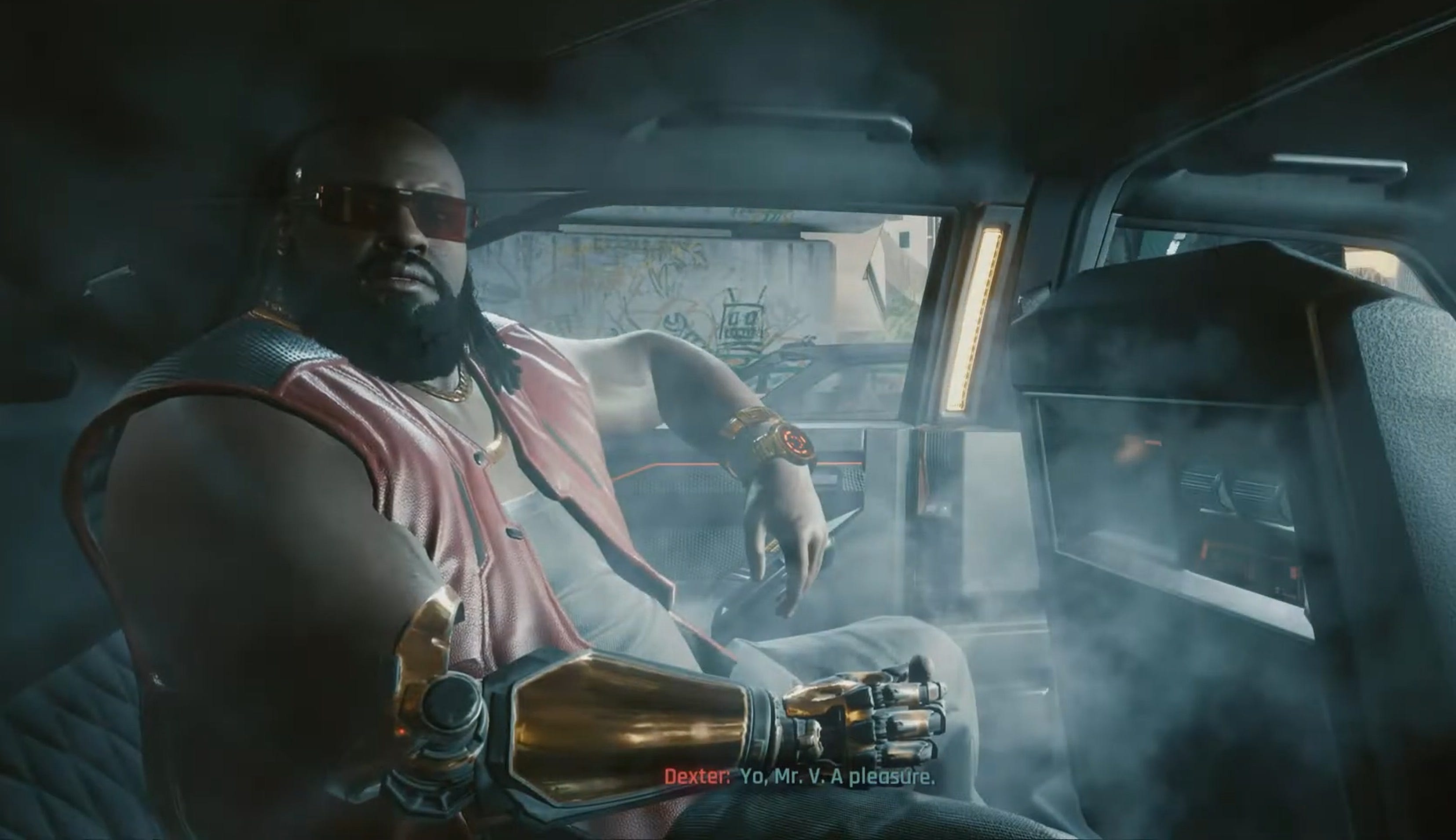
But what if we don’t care about consistency? Maybe we’re part of the lucky subset of the population who can just turn off their brain and enjoy a story. Then, movie games are great, right? We get a highly polished story and some gameplay. What’s not to like? Well, the gameplay.
Building all the polished narrative content consumes resources that could’ve gone into the gameplay. The result is that movie games often have undercooked gameplay. Again, I’ll use Cyberpunk 2077 as an example here. The itemization, combat system, quest design, and progression system are serviceable at best. These are the core strengths of an RPG, and Cyberpunk 2077 just doesn’t deliver here.
It’s blatantly obvious that this was a resource problem. For example, one of the big selling points of the game was multiple quest solutions. These lofty goals were fully realized in exactly one main mission: “The Pickup”. Conveniently, this was also the mission that was shown in the preview versions of the game to increase the hype. If CD Projekt RED had prioritized gameplay over presentation and storytelling, they probably could have built a lot more missions like that.
Movie games also have another flaw: limited replay value. I finished Cyberpunk 2077 and I have no desire to ever complete it again, as so much of it is spent with downtime. Sure, I could skip every cutscene, but what would actually be left of the game at that point?
Why would I replay a game with mediocre gameplay if I could just replay a game with great gameplay instead? To me, many movie games are simply disposable products. You play them once, might even enjoy them, and then you never touch them again. That’s ok, but far from the best video games have to offer.
Conclusion
Movie games are mediocre and suffer from structural flaws. It’s a pity that they have become so popular over the last twenty years. To me, this shows a deep confusion in both developers and journalists and a general lack of respect towards the medium as a whole.
This trend is especially lamentable as it has coincided with gaming becoming mainstream. I fear that newish gamers have no idea how interactive high-budget games actually were in the past. In a sense, they have never experienced “real” gaming, and I think that’s a shame.
As usual, our only hope lies in the indie sector, where games like Neon White show how exceptional gameplay is done. I think that it’s important to support these games and to reward indie developers who actually care about the medium instead of being pseudo movie directors.
As a side note, I’m far from the first person who complains about movie games. During my research for this post, I’ve stumbled over articles from 2008 and from 2014 on the same subject. So, the writing has been on the wall for a long time, but few people have paid attention to it.
Thanks for reading. Please consider subscribing to the Substack. Also, please share it with a friend. You can do both with these handy buttons below.
I loved that you pointed this out because sometimes the over-reliance on cinematics takes me out of the experience of actually playing
You make excellent points here. I have to beg to differ somewhat as a person who actually plays games for the story.
I have tripped my way through much clunky gameplay to get through a storyline. I forced myself to “git gud” at platforming to get through Jedi: Fallen Order because I’m that much of a Star Wars nerd. That game has a big problem with Ludonarrative dissonance (thank you for this term btw I will be using it 🤓). I mean, we’re running from the Empire but planet-hopping is no big deal, and how old is this list of Force-sensitive children? (Are they adults now?)
GOW: Ragnarok disappointed me in story as well as gameplay. It starts out great, the parts about Atreus and ticked-off Freya are so cool; but the story goes nowhere and the ending is like a a sad fart in the wind.